EASTPAK

EASTPAK Artist Studio

  About

Made from imagination

EASTPAK Artist Studio

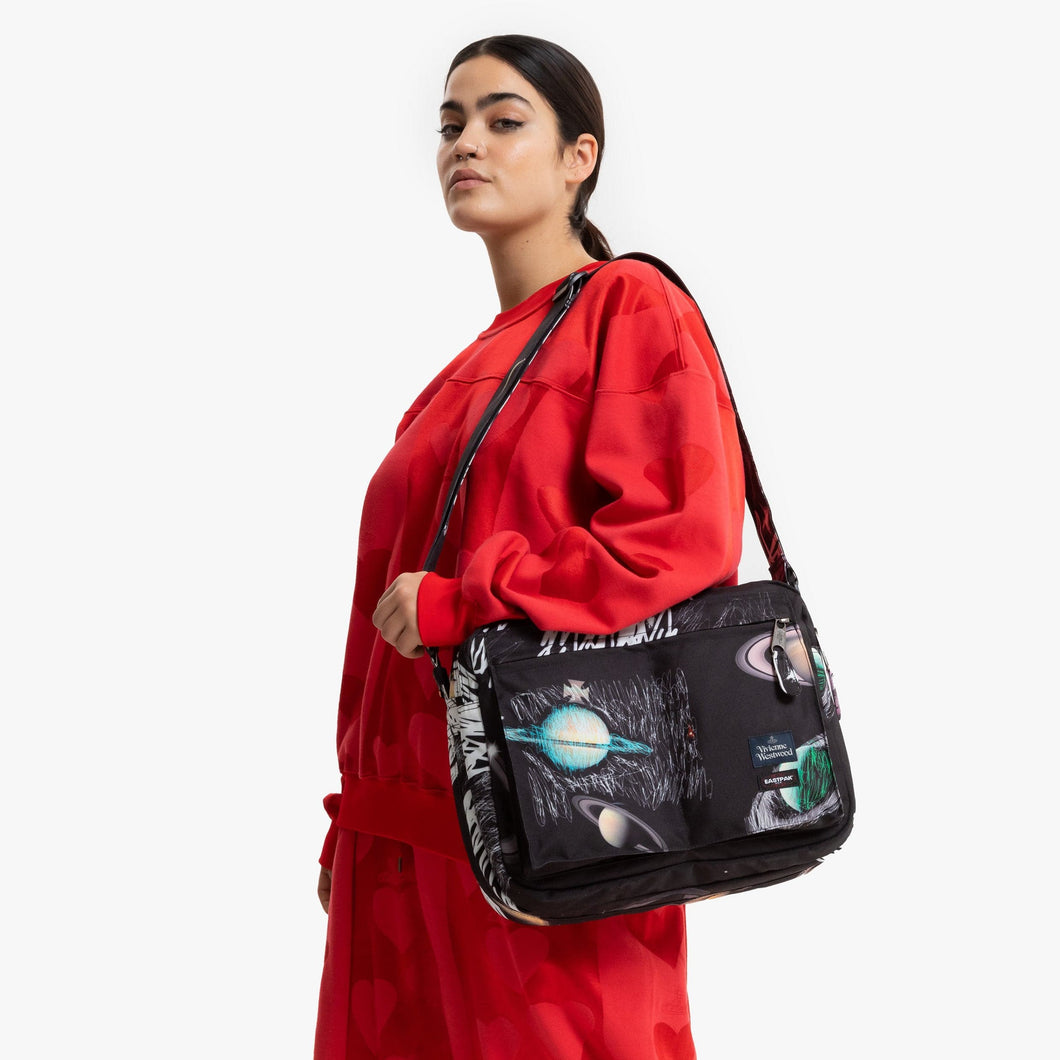
What happens when you put over 130 of the world's quirkiest, funkiest, most creative personalities in a room together with a limited edition blank EASTPAK Padded Pak'r? You get over 200 mind-blowing reinterpretations / recreations / reinventions of the original EASTPAK backpack.

Yes, the bag famous for becoming a reflection of its environment and an extension of its owner’s body has now become the extension of the world’s foremost artistic minds, all for the very worthy charity, Designers Against AIDS. From painters, sculptors and street artists to DJs, rock stars, fashion designers and even celebrity chefs. Names like German electro-house group Tiefschwarz, world-renowned designers Lola and Rocco Toscani from the Italian creative agency La Sterpaia; Johnny Marr from The Smiths; nail artist Sophy Robson; and US-based fashion designer and artist Jordan Betten (to name but a few).

Every EASTPAK bag is made to move with you... to adapt to your surroundings... to become one with you and the world around you. Each of the bags depicted here is a one-of-a-kind creation. The eclectic progeny of the EASTPAK Artist Studio and the community of minds it represents. A community we all share. A community whose creative energy stimulates us in every possible way.

EASTPAK is proud to give something back to those communities that give us inspiration each and every day. Which is why all proceeds from the EASTPAK Artist Studio go to the charity program, Designers Against AIDS. To help raise awareness for HIV/AIDS and promote prevention as the only cure for this insidious disease.

So turn the page. Explore. Imagine. And unleash your own creative vision on the world around you. Because the world belongs to everyone.

“The only way forward”

Designers Against AIDS founder, Ninette Murk talks about the vision and inspiration behind the organization, the challenges it faces today and what she sees as “the only way forward”.

Designers Against AIDS is an initiative born out of your organization Beauty Without Irony. What ties together the quest for an ‘honest appreciation for all things beautiful’ and HIV/AIDS, arguably one of the ugliest and most insidious diseases on earth?

“Beauty Without Irony and Designers Against AIDS are two sides of the same coin. If you want to make the world more beautiful (or healthy), you can either add more beauty (which is the idea behind BWI) or try to take away the ugliness (which is essentially DAA’s goal). When we just started with DAA, almost all the artists who worked for us (like Alain de Botton) came from the BWI ‘pool’. 

The trigger for BWI was that feeling I like to think we all get when something has the power to take your breath away, some amazing sight or sound. You get goose-bumps up your arms or shivers down your spine or tears in your eyes just because something is so unbelievably beautiful. The next step, for me, was to try and harness all the creativity that came out of BWI so that it would actually make a difference in the world.”

But why AIDS? How did you go from that vague ‘feeling’ of wanting to make the world a better place to the highly driven and focused organization that DAA is today?

“Believe it or not, that’s no easy question to answer. First of all, the decision was an emotional one, not a rational one. And many things played a part. I lost a dear friend of mine, Peter Verhelst (1964-1994) to AIDS-related complications in 1994. He was a young Belgian fashion stylist and one of the first people I knew who was very open about being HIV-positive. 

Later, when I was asked to organize a fundraiser for the jeans brand Evisu in 2001, I got to pick my own charity and with Peter Verhelst in mind I chose the HIV/AIDS research department of the Antwerp-based Institute of Tropical Medicine. So it all started under the banner of Designers Do Denim. While Beauty Without Irony had given me a sense of purpose, Designers Do Denim proved that creative energy (and, therefore, beauty) could be used to make the world a better place. 

So when I was asked to do another fundraiser in 2004 for that bastion of groove, Café d’Anvers in Antwerp, Belgium, I brought several international designers and musicians on board and Designers against AIDS was born. That project made me realize just how little young people these days are aware of the disease. Which spurred me on to bigger and better things. And as time went by, it just felt right to me that this is what I should be doing. It simply was the only way forward for me.”

Why do you think young people are so nonchalant when it comes to safe sex? Why is HIV on the rise again?

“Because they think HIV/AIDS has nothing to do with them because they’re not gay/African/drug users/prostitutes… Because there are anti-retroviral medicines now which help infected people live longer (often with horrible side effects, but young people don’t realize that)… Because there haven’t been any major safe-sex campaigns in the industrialized world for the last two decades… And, last but not least, because the media have lost interest because AIDS is no longer the dramatic disease it once was with people dropping dead like flies.”

What has AIDS got to do with fashion or design? 

“DAA uses fashion and other elements of pop culture – like music, the internet, art and social media – to get our message across simply because those are the things teenagers are interested in. Sadly, it means more to young people when, for instance, Timbaland says that safe sex is cool than when their mother tells them the exact same thing.”

You’ve worked hard with H&M in setting up the first International HIV/AIDS Awareness Education Centre in Antwerp (IHAEC). What other projects are on the agenda? 

“Well, we’re looking at setting up a second center in L.A. The idea is to invite young people from all over the world for a series of creative and practical workshops. Students learn how to set up projects in their own countries, combining the skills they have learned with their own insights, ideas and knowledge for local sensitivities. 

On top of that, we continue to collaborate with H&M on our global Fashion Against AIDS collections. And we are working on a new range of DAA branded condoms, making condoms funky and cool but above all beautiful. Condoms are central to preventing the spread of HIV. If everybody used them, the number of HIV infections would go down dramatically. It’s as simple as that.”

If money were no object, how would you go about getting the DAA message across to young people worldwide?

“I would engage both global and local artists and celebrities to get the safe sex message across to young people (like we do with Fashion Against AIDS with H&M, but bigger and more wide spread). I would also create a wave of social media campaigns and just keep them going until HIV has disappeared completely. I’d also love to organize a huge concert like Live AID back in the 80’s to raise both awareness and funds for HIV/AIDS organizations. But this is more than just a pipe dream. I think I will reach this goal within the next 5 years.”

If you had the undivided attention of each and every young person on earth for 30 seconds, what would you tell them?

“I don’t need 30 seconds. 5 is enough. I’d tell them what I always tell them, “If you’re old enough to have sex, you’re old enough to have safe sex. Respect yourself and the people you love. Use a condom.”

Designers Against Aids

DAA Non-profit organization 'Beauty Without Irony' has launched the international project 'Designers Against AIDS' (DAA) in 2004 in order to raise AIDS awareness in the international media and towards the general public, more specifically towards young people in the industrialised countries using elements from pop culture (music, fashion, design, arts, sports, film, celebrities,

For more information about DAA and how you can contribute, visit www.designersagainstaids.com